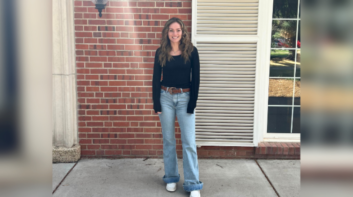



Becky Massingale is no stranger to being a caregiver. Since 1987, she’s been a social worker, and for the last two and a half decades, she’s worked primarily in home health, hospice, and respite care. But two years ago, when her mother’s caregiver moved away, Massingale quit her job and took on the task herself. Since then, she’s spent night and day caring for her aging family members.
Until her mother peacefully passed away, Massingale said she went to her mother’s house every day and coordinated with her sister to provide around-the-clock care.
“[My sister] was there at night and available should anything big happen, but I was going every day during the day and coordinating care and getting services and taking her to appointments and doing personal care,” Massingale told IW Features.
Even though she had to put her own life on hold, Massingale said ensuring her mother was able to maintain her dignity and peace at the end of her life was worth it.
“I wouldn’t trade that time with my mother for a gazillion dollars,” Massingale shared.
It’s why she and her husband have now taken on the task of caring for several other family members who have nowhere else to turn.
After her uncle had a stroke last summer, they started caring for him and his brother, whom he helped before the stroke. Both brothers require around-the-clock attention, with Massingale and her husband tag-teaming care.
After the younger of the two brothers, who suffered from neuropathy in his feet and legs, fell and ended up in the hospital, Massingale and her husband found themselves visiting the ER three times in one week trying to help his recovery. Massingale drove him home, but he soon was in the ER again after falling and cutting his ear. Again, she picked up from the hospital and drove him home.
“His clothes were blood soaked,” Massingale said. “When we opened the garage door, I could see the blood all the way down the side of his car where he had… waited for the ambulance.”
His health problems only continued. One time, Massingale said that he couldn’t get out of bed, and the hospital discovered he had a fractured sacrum.
Massingale has tried traditional caregiving solutions, but she and her husband have found these services to fall short of their family’s needs. For example, she said that when a snowstorm hit South Carolina, the caregivers couldn’t reach her uncle’s home, and she and her husband were left to do alternating 12-hour shifts.
This continued when her uncle could no longer self-administer his medication. Massingale explained the hired caregivers couldn’t assist with his medication regimen, even if the doses were already prepared and left with instructions.
Again, Massingale was left to provide care as her uncle reached the end of his life. Her sister came over for a few days to assist, and when their uncle passed away, Massingale was left with the peace of knowing that he did so in his own home with family nearby.
“He got good care, and he was relatively comfortable, especially at the very end,” she said. “He was very peaceful. He had some good conversation with family members. I think he was very much at peace.”
Her surviving uncle is disabled and has autism-like symptoms, though he’s never been formally diagnosed, which presents a unique challenge for Massingale as his caregiver.
“At one week following his brother’s death, he goes out in the garage and gets an old rusty box cutter and slits his wrist,” Massingale said. “He bleeds all over the house and goes back in his bedroom and decided he wasn’t dying fast enough. So he bandaged himself up and went to bed.”
Massingale shared that this happened just two weeks prior to speaking with IW Features. And when she talked with IW Features, she had just returned home from the hospital where her uncle is in the psychiatric section. There, his condition has deteriorated further.
“[I’ve] never seen him look quite that puny,” Massingale said. “If he’s 75 pounds right now, soaking wet, I’d be surprised.”
She said she offered him phone numbers of other family members, hoping he could reconcile any disputes before he passed, as she’s seen two of her other uncles do. It’s this personal touch that sets Massingale’s efforts apart from situations where people are forced to age away from home and their families.
However, caring for her family is not without its challenges, and between hospital visits, round-the-clock care needs, and multiple aging family members, Massingale said, “we’ve had to just adapt.”
But for her, the sacrifice is worth it to provide her family with dignity and peace at the end of their lives as they age at home, in their community, and surrounded by loved ones.
“You can make [end-of-life care] a very peaceful process that is relatively pain-free most of the time and manageable,” Massingale said, reflecting on her experience working in hospice and respite care. “For me, that’s the goal. And I think I’m pretty satisfied that we have done that up to this point at least. And I hope we’re going to be able to continue.”
For one in 10 Americans like Massingale who are caring for an aging family member, this is the day-in, day-out reality. With few other viable options, families put their lives on hold as they tend to the daily physical and mental needs of their senior relatives who have nowhere to turn. With a growing aging population, many more Americans are soon to face the same dilemma.
Through this challenge, Massingale is driven by an attitude of service learned from the armed forces members in her family. Her father served in Korea, one uncle served in Desert Storm, several other uncles served in the Air Force, and her husband is also retired from the military.
“There’s no greater love than a man has than to lay down his life for his friends,” she said, citing a Bible verse she has heard countless times in military settings. “I absolutely believe it is also true of caregiving.”
“There’s a huge sense of peacefulness and satisfaction when you are able to send somebody home in the way that they want to go,” she added. “There’s nothing like it.”